


How to Get to Major European F1 Circuits Without a Car
January 2026
Attending a Formula 1 race in Europe is one of the great sporting experiences on the planet. The racing is elite, the venues are historic, and the atmosphere is unmatched. The good news is that you do not need to rent a car to enjoy it. In fact, for many European circuits, driving is the least efficient option.
European race weekends are built around public transport, event shuttles, and walkable access routes. With the right planning, you can move from airport to grandstand smoothly, predictably, and often faster than fans stuck in traffic.
This guide breaks down how to reach major European F1 circuits without a car, using only trains, buses, metros, and official event transport.
Key Takeaways
- Most European F1 circuits are designed for public transport access on race weekends
- Trains plus event shuttles are usually faster than driving
- Several circuits are walkable from nearby towns or stations
- Planning your arrival timing matters more than the transport mode itself
Why Public Transport Beats Driving on Race Weekend
On F1 weekends, roads around circuits are heavily restricted, parking is limited, and traffic congestion can be severe. Public transport avoids all of that.
European race promoters coordinate closely with rail operators and local authorities to run additional services, longer operating hours, and dedicated shuttle buses. These systems are tested every year and move tens of thousands of fans efficiently.
If your goal is to arrive calm, on time, and with minimal friction, public transport is the winning strategy.
Core Transport Options for F1 Fans
Trains
Trains are the backbone of race-weekend travel across Europe. Intercity rail connects airports and major cities, while regional trains link smaller towns close to circuits.
Benefits include predictable schedules, high capacity, and direct connections from city centers. On race weekends, extra services are often added specifically for fans.
Buses and Official Shuttle Services
Most circuits that are not directly in city centers operate official shuttle buses on race days. These run from designated train stations or city hubs straight to the circuit gates.
Shuttles are reliable, well-signed, and included or discounted with some tickets. They are often the final leg of the journey.
Rideshares and Taxis
Rideshares can work for short distances, especially when splitting costs with other fans. However, they are rarely the fastest option near circuits due to traffic restrictions and drop-off limitations.
Use rideshares strategically, not as your primary plan.
How to Reach Major European F1 Circuits Without a Car
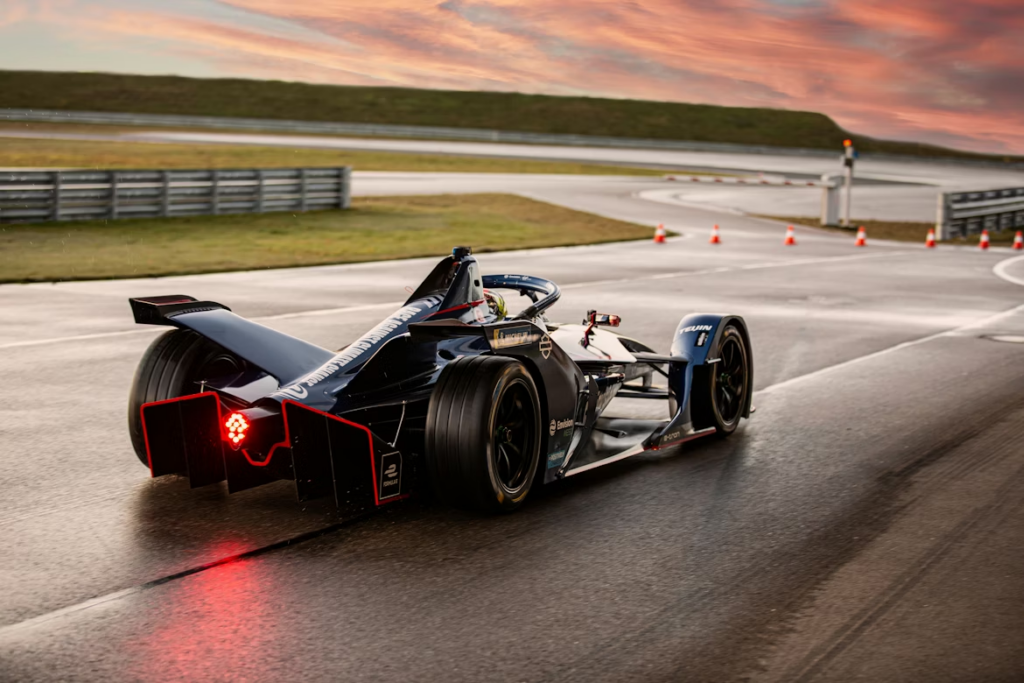
Silverstone Circuit (United Kingdom)
Silverstone is rural, but race-weekend transport is highly organized.
How to get there:
- Train from London Euston to Milton Keynes Central, Banbury, or Bicester North
- Official race shuttle buses run continuously from these stations to the circuit
Driving is slower than rail plus shuttle on race days.
Nearest stations used by fans:
Milton Keynes Central, Banbury, Bicester North
Circuit de Monaco (Monaco)
Monaco is the easiest car-free F1 circuit in the world.
How to get there:
- Train to Monaco–Monte-Carlo station
- Walk directly to the grandstands and general admission areas
The station is built into the city, and exits place you minutes from the circuit.
Monza Circuit (Italy)
Monza combines excellent rail access with walkable final approaches.
How to get there:
- Train from Milano Centrale or Milano Porta Garibaldi to Monza
- Local buses or official shuttle buses to Parco di Monza
- Many fans walk from Monza town into the park
Expect crowds, but the system moves efficiently.
Circuit de Barcelona-Catalunya (Spain)
This is a classic train-plus-walk circuit.
How to get there:
- Train from Barcelona Sants or Passeig de Gràcia to Montmeló
- Walk 30 to 40 minutes to the circuit or use the event shuttle buses
Arrive early. Heat and congestion are factors here.
Hungaroring (Hungary)
The Hungaroring is well served by suburban rail and buses.
How to get there:
- Metro Line M2 from central Budapest to Örs vezér tere
- Suburban train (HÉV) to Kerepes
- Shuttle buses or a short walk to the circuit
Public transport is the standard option for this race.
At-a-Glance: Car-Free Circuit Access
| Circuit | Primary City Hub | Key Station | Final Access |
|---|---|---|---|
| Silverstone | London | Milton Keynes Central | Official shuttle bus |
| Monaco | Monaco | Monaco–Monte-Carlo | Walk |
| Monza | Milan | Monza | Bus, shuttle, or walk |
| Barcelona-Catalunya | Barcelona | Montmeló | Walk or shuttle |
| Hungaroring | Budapest | Örs vezér tere | Bus or walk |
Planning Your Race Weekend Timing
Timing matters more than route choice.
- Arrive at least one day before race day
- Use the earliest trains on Sunday morning
- Expect heavier crowds after qualifying and before the race
European systems handle volume well, but peak congestion is real.
Booking Accommodation Without a Car
Best Locations to Stay
- Near major train stations, not near the circuit itself
- City centers with direct rail access to race routes
- Areas served by multiple transport lines
This gives flexibility if one route becomes crowded.
Alternative Stays
Apartments, guesthouses, and smaller hotels often offer better value than circuit-adjacent hotels. Being near transport beats being near the track.
Circuit Entry Tips for Public Transport Users
- Follow signage for pedestrian and shuttle entrances
- Avoid last-minute gate changes by checking official circuit maps
- Expect walking even after the shuttle drop-off
Walking the final stretch is normal and often faster than any vehicle.
What Else to Do Beyond the Race
F1 weekends are full-scale events.
- Pit lane walks on Thursday or Friday
- Fan zones with simulators and merchandise
- Concerts and evening entertainment
Arrive early and explore. The race is only part of the value.
Travel Requirements and Practical Considerations
Visas
For U.S. citizens:
- No visa required for short tourist stays in Schengen countries
- Passport must be valid for at least six months beyond travel
Always check official government guidance before departure.
Health and Safety
- No F1-specific health requirements
- Bring sunscreen, ear protection, and refillable water bottles
- Outdoor circuits mean long days on your feet
Payments and Money on Race Weekend
Most European circuits are largely cashless.
- Credit and debit cards are widely accepted
- Mobile payments are commonly supported
- Carry a small amount of local currency for transit or small vendors
Notify your bank before traveling.
Packing Essentials for Race Day
- Comfortable walking shoes
- Weather protection
- Earplugs or noise-reducing headphones
- Portable phone charger
Binoculars are underrated and extremely useful.
Wrap-Up: The Smart Way to Do F1 in Europe
European Formula 1 circuits are built for public transport, not private cars. Trains, metros, and shuttle buses move faster, cost less, and remove stress from race weekend travel.
With the right planning, you can land at the airport, step onto a train, and walk into the grandstands without ever touching a steering wheel.
That is not a compromise. That is the optimal strategy.
This guide is designed to be your starting point and your reference hub. Use it well, and let the racing be the hard part.




What’s your prediction for this race?
- Lewis Hamilton (0%, 0 Votes)
- Max Verstappen (0%, 0 Votes)
- Lando Norris (0%, 0 Votes)
- Charles Leclerc (0%, 0 Votes)
- Other (0%, 0 Votes)
Total Voters: 0
 Loading ...