Musician
Hans Zimmer
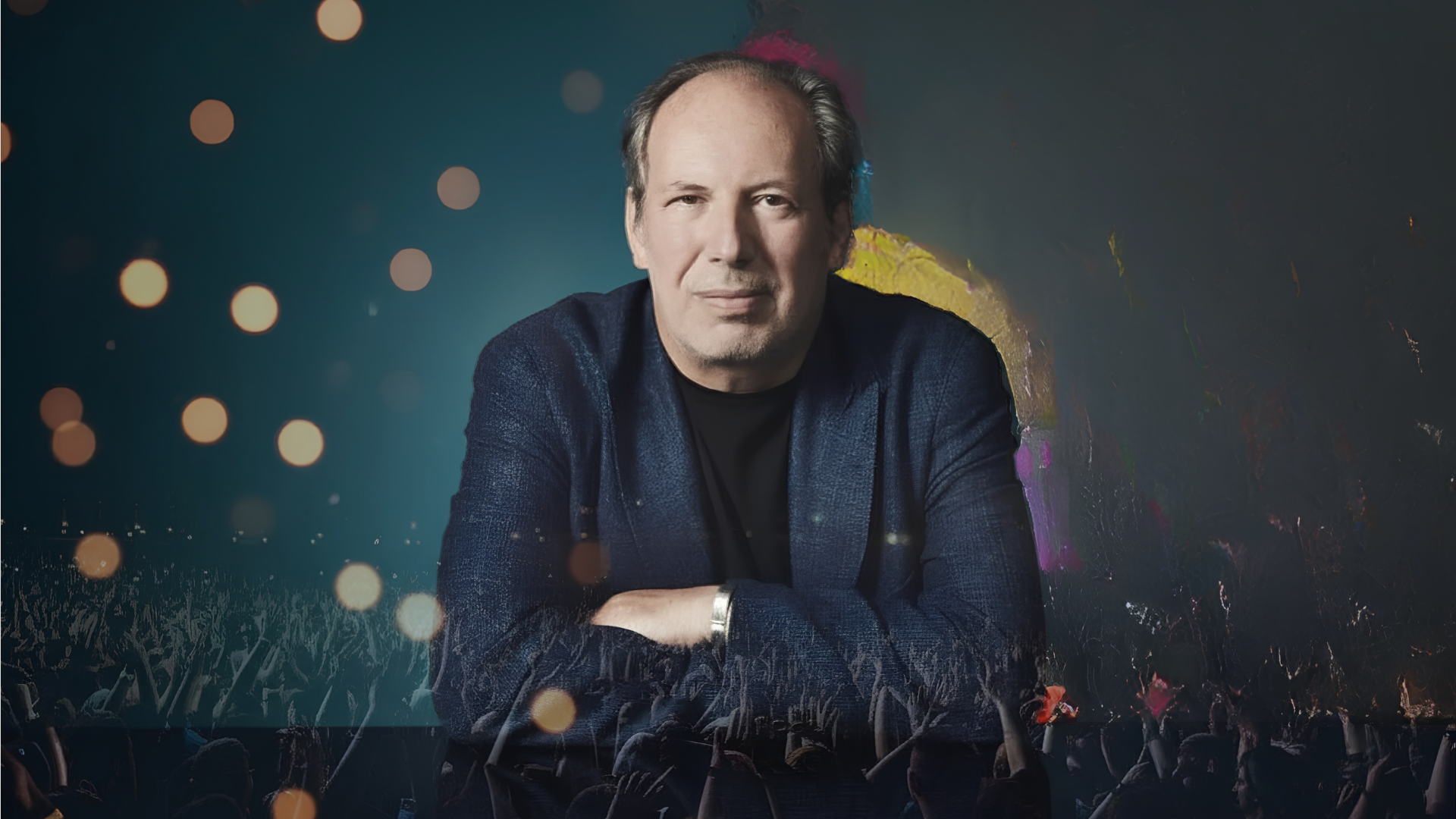
Hans Zimmer, the German Film Score composer, has won Academy Awards for Best Original Score for The Lion King in 1994 and Dune: Part One in 2021. His fifth Grammy Award came in 2025, for Dune: Part Two.
Hans Zimmer (born 12 September 1957) is a German Film Score musician. He has received five Grammy Awards, three Golden Globe Awards, and a BAFTA Award. Zimmer won Academy Awards for Best Original Score for The Lion King (1994) and Dune: Part One (2021).
Be the first to know
No Hans Zimmer events lined up right now. We'll email you the moment new hospitality packages go on sale.
About Hans Zimmer
Hans Zimmer live in the UK: which production is which
The World of Hans Zimmer - A New Dimension plays six UK and Ireland dates in October 2026, and Hans Zimmer does not appear on stage in it. He is its musical director and curator, and the production states on its own site that the maestro does not appear on stage. Matt Dunkley conducts. His other touring production, Hans Zimmer Live - The Next Level, is the one he plays in, and it lists no British or Irish date. Anyone booking for a group should check which of the two productions a date belongs to before choosing.
The UK and Ireland leg runs six dates in nine days in October 2026: Dublin at the 3Arena on the 4th, Glasgow at OVO Hydro on the 6th, Manchester at Co-op Live on the 7th, Leeds on the 8th, Birmingham at Utilita Arena on the 10th and London on the 12th. All six were showing as available on the production’s own tour list on 30 August 2026. The run then continues into a second European leg across April and May 2027, which carries no British date.
The two touring productions
The World of Hans Zimmer - A New Dimension is the production touring the UK in October 2026, and Hans Zimmer is not in the cast. It is presented by Semmel Concerts, Tomek Productions and RCI Global, conducted by Matt Dunkley, and performed by an ensemble of named vocalists and instrumentalists including Carla Chamoun, Gan-ya Ben-gur Akselrod, Nokukhanya Dlamini and Futurelove Sibanda on vocals, with Maya Levy on violin and Amir John Haddad on guitar. The production names further players, and it never promises a particular soloist on a particular night.
Hans Zimmer Live - The Next Level is the other production, and it is the one in which he plays. Its own site states that he performs live on stage in that show. As of 30 August 2026 its published run went from Yokohama in September to Abu Dhabi on 13 November 2026, with no date in the UK or Ireland for 2026 or 2027. Schedules like this one move, so it is worth checking again nearer the time.
History & Achievements
Hans Florian Zimmer, a German musician born in Frankfurt am Main in 1957, is a highly acclaimed composer renowned for his extensive work in film scores. His distinctive sound has graced over 150 films since the 1980s, establishing him as a prominent figure in contemporary cinema.
Zimmer has won two Academy Awards for Best Original Score, for The Lion King and Dune: Part One, from twelve nominations. The years used on this page are film release years, 1994 and 2021, not ceremony years. He has also won five Grammy Awards, the most recent in 2025 for Dune: Part Two, three Golden Globe Awards and a BAFTA Award, and he holds multiple Primetime Emmy nominations without a win. The Daily Telegraph named him among its Top 100 Living Geniuses in 2007.
Work announced as of August 2026 includes the original score for HBO's Harry Potter series, a collaboration with A.R. Rahman on a two-part film, and Click Clack Symphony, a track made with Raye. Announced work moves, and none of those dates is fixed.
Hospitality & Private Box Information
Hans Zimmer Corporate Hospitality Experience
The World of Hans Zimmer - A New Dimension plays five British dates in October 2026, and this is what a host is actually buying. It is a fully seated orchestral concert of film music, conducted by Matt Dunkley, with Hans Zimmer credited as musical director and curator but not on stage. In Glasgow doors open at 6.30pm on Tuesday 6 October 2026. Premium hospitality on a night like this adds hosted entry away from the general concourse and a private bar before the show and at the interval. It suits client entertaining because the group stays together and nobody has to shout.
The Event Experience
The evening is orchestral and fully seated. The production's own credits list draws on Pirates of the Caribbean, Inception, The Dark Knight, No Time To Die, Kung Fu Panda 3 and Top Gun: Maverick, among other films, though a credits list is not a running order and no running order is published in advance. The production itself publishes no running time, no interval length, no orchestra name and no musician headcount. What is published is concrete and worth planning around: doors at OVO Hydro in Glasgow open at 6.30pm on Tuesday 6 October 2026, and the venue says stage times will follow once the promoter confirms them.
Hans Zimmer personally oversees this concert series as its musical director and curator, in the production’s own words. For a host that means an established touring production rather than a one-off gala: the shape of the evening is settled even though the programme is not published in advance, and the choice of seat rewards a few minutes of thought.
What a host should settle before booking
A seated show changes how the evening is planned. Nobody is standing at the back, so a group stays together for the whole performance and the talking happens either side of it rather than during it. That makes the format straightforward for mixed groups and for guests who would find a standing concert hard work, and it makes the seating decision the main one of the evening rather than an afterthought.
Worth saying to guests in advance: travel, parking and overnight accommodation are theirs to arrange, and the venue controls what happens inside the building on the night. Accessible seating, step-free routes and companion arrangements are set by each venue rather than by the production, and the OVO Hydro venue page carries the current Glasgow detail. Glasgow also applies an age rule a family group needs to know about: everyone under 14 must be accompanied by an adult aged 18 or over, and there is a limit of six tickets per person.
It suits clients and teams who want an evening with a shared reference point and no need to shout over it, and it works for a group spread across a wide age range. A rewatch beforehand pays off. It works less well as a purely networking-led evening, because the room is dark and quiet for long stretches by design.
For the wider category, see classical and orchestral concert hospitality, and for the date this section describes, see The World of Hans Zimmer at OVO Hydro Glasgow. For the other headline classical act in the same season, see Andrea Bocelli.
Premium and VIP Tickets
Hans Zimmer VIP Tickets and Premium Seating
These shows are built around the sound, so where you sit matters more than it does at a rock concert. Premium hospitality puts guests in the stronger acoustic areas of the bowl with hosted entry and a private bar rather than the general concourse, which is the practical difference on an arena night.
Where a private bar forms part of the hosting, it runs under the venue's own licence: alcohol is served to over-18s only, and photo ID may be requested under Challenge 25.
Because the production is fully seated, a premium position buys sightline and acoustics rather than proximity to a barrier. The lines carrying the melody in these arrangements are often a single voice, a violin or a guitar set against a large ensemble, and those are the parts that thin out at the extreme sides of an arena. Each venue sets which seated positions it opens for the date, so the position is settled against that venue rather than assumed from another night on the same tour.
The room behaves more like a concert hall than a rock arena: the house is seated and the audience came to listen. Hospitality works best here when the hosting sits in the arrival and the interval, then stays out of the way once the music starts.
Related
- London Symphony OrchestraThe London Symphony Orchestra is one of the world's leading orchestras. Based at the Barbican Centre, the LSO performs concerts, records film scores, and runs extensive education and community programs.
- The Essential Orchestra
- Jules Buckley
- Lang LangFind lang lang tickets uk for this acclaimed Chinese pianist. The first Chinese musician at the Berlin Philharmonic, he performs Classical works at major UK venues.
- Andrea BocelliAndrea Bocelli performs at Principality Stadium, Cardiff on Saturday 8 May 2027, on the headline night of the inaugural Land of Song Festival. It is his first headline concert in Wales; he last performed in Wales in 2005. Andrea Bocelli hospitality means a seating position you choose rather than one you are allocated, a hosted entry route away from the general concourse, and a private space to use before the performance.
- A.R. RahmanA. R. Rahman is an Indian composer, singer-songwriter, and record producer, known as the "Mozart of Madras," who won two Academy Awards, a Grammy, a BAFTA, and a Golden Globe in 2009 for the Slumdog Millionaire soundtrack.
Key Facts
- Born
- 12 September 1957
- Nationality
- German
- Genre
- Film Score
- Full Name
- Hans Florian Zimmer
- Birthplace
- Frankfurt am Main, Germany
- Notable Achievement
- Academy Award for Best Original Score – The Lion King (1994)
- Films Scored
- Over 150 films since the 1980s
- Signature Technique
- Minimalism – repeating patterns and gradual changes to build tension and emotion
- Early Career
- Worked with The Buggles as keyboard player
Frequently Asked Questions
Inclusions for Hans Zimmer VIP tickets are set per venue and per package rather than by the production, so they vary by date. Premium hospitality at an arena concert usually covers a reserved seat in a stronger position, a hosted entry away from the main concourse queue, and access to a private bar or lounge before the show and at the interval. Food differs by venue. The performance itself does not change with the package.
Hans Zimmer’s live shows are built around the sound, so where you sit matters more than usual. Premium hospitality puts you in the stronger acoustic areas with a private bar and hosted entry instead of the general concourse. The October 2026 dates are fully seated arena shows, so the choice is which seated position rather than seated against standing, and the OVO Hydro venue page carries the current Glasgow detail.
The World of Hans Zimmer - A New Dimension, which he curates and directs, plays six UK and Ireland dates in October 2026: Dublin at the 3Arena on the 4th, Glasgow at OVO Hydro on the 6th, Manchester at Co-op Live on the 7th, Leeds on the 8th, Birmingham at Utilita Arena on the 10th and London on the 12th. All six were showing as available on 30 August 2026. He does not appear on stage in it. His own show, Hans Zimmer Live - The Next Level, lists no British or Irish date for 2026 or 2027.
Hans Zimmer performs in one of his two touring productions, not the other. In Hans Zimmer Live - The Next Level he is on stage, leading and playing. In The World of Hans Zimmer - A New Dimension, touring Britain in October 2026, he is musical director and curator and does not appear on stage; that show is conducted by Matt Dunkley, and the production says he personally oversees the concert series. Check which production a date belongs to before booking.
No running time and no interval length are published for The World of Hans Zimmer - A New Dimension, by the production or its UK venues, so we do not print one. What is published is the door time: 6.30pm at OVO Hydro in Glasgow on 6 October 2026, with the stage time to follow from the promoter. Plan the hosting around doors, and expect an arena finish rather than a theatre one.
The concert dates themselves are already on general sale: all six UK and Ireland dates were showing as available on the production’s own tour list on 30 August 2026. Hospitality is a separate release and does not follow one fixed calendar across the tour, because each venue opens its own hosted and premium seating for a date at its own pace, and for arena concerts that usually happens after the general on-sale rather than before it. Because there is no single published date for it, the position for any given night is checked against that venue rather than assumed from another date on the same run.
Hospitality for these concerts is arranged by enquiry rather than online checkout, and nothing is bookable from this page. The reason is that inclusions are set per venue and per package, so what exists for Glasgow on 6 October 2026 is not what exists for Birmingham on the 10th. An enquiry names the date, the number of guests and what the evening has to do; the answer comes back as what is genuinely open on that date, with terms confirmed off-page before anything is committed.
Travel, parking and any overnight stay are the guests’ own arrangements rather than part of a hospitality package, and the routes into the building are set by the venue rather than by the production. Doors at OVO Hydro in Glasgow are at 6.30pm on Tuesday 6 October 2026 and the stage time follows once the promoter confirms it, so plan the arrival around doors rather than an unpublished start. The OVO Hydro venue page carries the current transport, parking and step-free access detail for the night. Glasgow also applies an age rule: everyone under 14 must be accompanied by an adult aged 18 or over.
Quick Facts
- Profession
- Musician
- Born
- 12 September 1957
- Nationality
- German
- Genre
- Film Score
Frequently Asked Questions
Achievements
- 2025Grammy Award for Dune: Part Two
- Academy Award for Best Original Score - Dune (2021 film)
- Academy Award for Best Original Score - The Lion King (1994 film)
- Five Grammy Awards in total
- Three Golden Globe Awards
- BAFTA Award
- Multiple Primetime Emmy nominations, no win
- 2007Top 100 Living Geniuses - The Daily Telegraph
- 1988Academy Award nomination for Rain Man
No Upcoming Hans Zimmer Events
Be the first to know when new hospitality packages become available