


How Formula 1 Qualifying and Race Scoring Work
January 2026
Formula 1 is a sport built on fine margins. A few hundredths of a second in qualifying or a single strategic decision during the race can decide the outcome of an entire weekend. To fully appreciate what happens on track, it helps to understand how qualifying works and how points are awarded.
Qualifying determines where drivers start on the grid, while the race scoring system decides how championships are won and lost over a season. Together, they form the competitive backbone of Formula 1.
In this guide, we break down the current Formula 1 qualifying format, race procedures, and points system, explaining how they work and why they matter.
Key Takeaways
- How Formula 1 qualifying determines the starting grid
- How race and sprint points are awarded
- How championship standings are calculated
- Why a qualifying position shapes race strategy
- How recent rule changes affect modern F1 weekends
The Basics of Formula 1 Racing
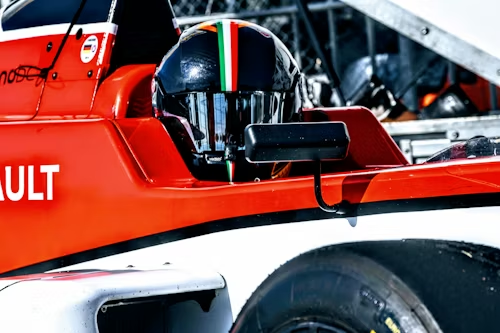
Formula 1 is the highest level of single-seater motorsport. Teams design and build highly advanced cars, while drivers compete across a global calendar of races on permanent circuits and street tracks.
What sets Formula 1 apart is the combination of engineering, driver skill, and strategy. Success depends not just on speed, but on preparation, decision-making, and execution under pressure.
The Structure of a Formula 1 Race Weekend
A standard Formula 1 race weekend consists of three core elements:
- Practice sessions are used to refine the car setup and gather data
- Qualifying, which sets the starting grid
- The race, where points are awarded
On selected weekends, a Sprint format is used, which slightly alters the schedule. Both formats are explained later in this article.
Understanding the Formula 1 Qualifying Format
Qualifying is where drivers fight for track position before the race even begins. Starting closer to the front often provides a strategic advantage, particularly at circuits where overtaking is difficult.
Formula 1 uses a knockout qualifying system made up of three timed sessions.
The Three-Session Knockout System
Qualifying is split into Q1, Q2, and Q3. After each session, the slowest drivers are eliminated until the final grid positions are set.
Q1: First Elimination Session
- Duration: 18 minutes
- All 20 drivers participate
- The slowest five drivers are eliminated and start the race in positions 16 to 20
Q2: Second Elimination Session
- Duration: 15 minutes
- 15 drivers remain
- The slowest five are eliminated and start in positions 11 to 15
Q3: The Pole Position Shootout
- Duration: 12 minutes
- Top 10 drivers compete
- Fastest lap earns pole position
Between sessions, short breaks allow teams to prepare tires and adjust strategy.
Image Placement
Image suggestion: Visual showing Q1 to Q2 to Q3 eliminations
Alt text: Formula 1 qualifying knockout format from Q1 to Q3
Special Qualifying Rules in Formula 1
The 107 Percent Rule
To qualify for the race, a driver must set a lap time within 107 percent of the fastest time in Q1. This rule exists to prevent cars that are significantly off the pace from creating safety risks.
Drivers who fail to meet this threshold may still be allowed to race at the stewards’ discretion, typically if they demonstrated sufficient speed during practice sessions.
Grid Penalties and Adjustments
Drivers can receive grid penalties for technical changes or sporting infringements, such as:
- Exceeding engine component limits
- Gearbox changes
- Impeding other drivers
These penalties are applied after qualifying and can move a driver down the grid regardless of lap time.
Qualifying in Changing Weather
The weather can dramatically affect qualifying. Rain often forces teams to gamble on timing, as track conditions can improve or deteriorate rapidly. Choosing when to run and which tires to use can matter more than outright speed.
Sprint Qualifying and Sprint Races
On selected race weekends, Formula 1 uses a Sprint format designed to add competitive action earlier in the weekend.
How Sprint Weekends Work
Sprint weekends follow a different structure:
Friday
- Practice Session
- Sprint Qualifying, which sets the Sprint grid
Saturday
- Sprint Race, approximately 100 km
- Grand Prix Qualifying, which sets the Sunday race grid
Sunday
- Grand Prix
Sprint Qualifying and Sprint Races are separate from Grand Prix qualifying and do not replace it.
Image Placement
Image suggestion: Sprint weekend schedule diagram
Alt text: Formula 1 sprint weekend format showing sprint qualifying and sprint race
Sprint Race Points System
Sprint races award points to the top eight finishers:
| Position | Points |
|---|---|
| 1st | 8 |
| 2nd | 7 |
| 3rd | 6 |
| 4th | 5 |
| 5th | 4 |
| 6th | 3 |
| 7th | 2 |
| 8th | 1 |
Sprint results do not award pole position and do not determine the Grand Prix grid.
Formula 1 Race Day Procedures
Formation Lap and Race Start
Before the race begins, drivers complete a formation lap to warm their tires and brakes. Cars then line up on the grid, and the race starts once the lights go out.
Race Distance and Time Limits
A Formula 1 race is scheduled to exceed 305 kilometers, with Monaco being the exception at 260 kilometers. There is a two-hour limit for active racing, with an overall maximum time allowance if the race is suspended.
Safety Car and Red Flag Rules
The Safety Car is deployed when track conditions are unsafe but racing can continue at reduced speed.
A red flag stops the race entirely. Cars return to the pit lane, and the race may be restarted depending on circumstances.
Image Placement
Image suggestion: Safety car leading the field
Alt text: Safety car deployed during a Formula 1 race
The Current Formula 1 Points System
Race Points Distribution
Points are awarded to the top 10 finishers in each Grand Prix:
| Position | Points |
|---|---|
| 1st | 25 |
| 2nd | 18 |
| 3rd | 15 |
| 4th | 12 |
| 5th | 10 |
| 6th | 8 |
| 7th | 6 |
| 8th | 4 |
| 9th | 2 |
| 10th | 1 |
No bonus point is awarded for fastest lap under current regulations.
Championship Scoring Explained
Drivers’ Championship
Drivers accumulate points across the season. The driver with the highest total wins the World Drivers’ Championship.
Constructors’ Championship
Teams score points based on the combined results of both drivers. This championship rewards consistency, reliability, and teamwork.
Tie-Breaking Rules
If two drivers or teams finish with equal points, the ranking is decided by:
- Number of wins
- Number of second-place finishes
- Continuing through finishing positions as needed
Strategic Impact of Qualifying and Scoring
Why Qualifying Position Matters
Starting near the front reduces traffic, lowers risk, and gives teams more strategic options. Drivers starting further back often need aggressive pit strategies or safety car opportunities to move forward.
Points-Driven Race Decisions
Teams constantly evaluate whether to defend position, push for overtakes, or settle for points. Championship context often determines whether a driver takes risks or plays it safe.
Final Thoughts
Formula 1’s qualifying and scoring systems are designed to reward speed, consistency, and strategic intelligence. Understanding how they work adds depth to every session, from a tense Q3 lap to a calculated points finish on Sunday.
Once you know the rules, Formula 1 stops being just fast cars on a track and becomes a high-stakes chess match played at 300 kilometers per hour.


