Featured
Boxing
Explore CategoryBoxing is easy to enjoy and surprisingly hard to follow at first, mainly because ringside talk has its own language. Commentators will fire out terms at speed, trainers will shout single words that mean whole tactics, and the crowd will react to things you might not spot yet.
This guide covers the boxing terms you will hear most often, what they actually mean, and why they matter. No lecture, no fluff, just the useful stuff.
Key takeaways
Understanding a handful of common terms makes fights far easier to follow. You will spot the tactics, understand why rounds are scored a certain way, and make sense of what corners and commentators are calling for.
The basics you need before the jargon
A professional fight is split into rounds, usually three minutes each with a one-minute break. Judges score each round separately, then add them up at the end if nobody is stopped.
Boxing is also different from other combat sports because it involves only punches. No kicks, no grappling, no clinch work like you see in MMA. That makes small details, footwork, timing, and positioning much more important than they look on TV.
Punches you will hear called out
These four are the foundations of almost everything.
Jab
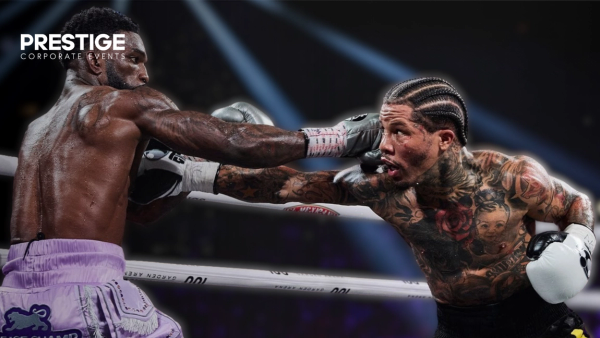
A straight lead-hand punch. Used to measure distance, disrupt rhythm, and set up bigger shots.
Cross
A straight rear-hand punch. Usually, the power shot behind the jab.
Hook
A short, curved punch, often aimed at the head or body. You will hear “left hook” a lot for a reason.
Uppercut
A punch travelling upwards, typically aimed at the chin or body on the inside.
Common combinations
One-two
Jab then cross. The most common combination in boxing.
Two-three
Cross, then hook. Often used when a fighter has an opponent backing up.
Body shot / body work
Punches aimed at the ribs or stomach. They score, slow movement, and reduced stamina.
Counter
A punch thrown immediately after making an opponent miss. Counters win rounds because they look clean and deliberate.
Defence and movement terms that matter
Defence is not “running”. Done properly, it is how fighters stay safe while creating openings.
Guard
How a fighter protects their head and body with arms and gloves.
Block
Absorbing a punch on the gloves or arms.
Parry
Redirecting a punch with a small deflection, often the jab.
Slip
Moving the head just off the centre line so the punch misses.
Roll/weave
A fuller movement under and around hooks, often called “rolling under”.
Footwork
How a fighter moves their feet to maintain balance, control distance, and create angles.
Clinch
Tying up an opponent to stop exchanges, slow the pace, or recover. It is legal within limits, but repeated holding can be warned or penalised.
Range and positioning language
Most fights are really about controlling where the fight happens.
Outside
Longer range, usually jab-heavy. Often used by taller or quicker fighters.
Inside
Close range with shorter punches, body work, and hooks. Harder, messier, more physical.
In the pocket
The danger zone where both fighters are close enough to land clean shots. If someone is “comfortable in the pocket”, they are happy trading.
Angles
Stepping slightly to the side to create a better punching lane and avoid counters.
Cutting off the ring
Pressuring in a smart way, using footwork to limit escape routes rather than chasing.
On the ropes
A fighter is backed up against the ropes. Sometimes they are in trouble, sometimes they are baiting counters. Context matters.
Scoring terms you will hear all night
The scoring system
Professional boxing uses the 10-point must system. The round winner gets 10, the other fighter usually gets 9. Big rounds can be 10–8.
What judges look for
You will hear these phrases repeatedly because they are what rounds are judged on.
Clean punching
Shots that land clearly, not mostly blocked or glancing.
Effective aggression
Pressing forward in a way that actually lands scoring punches. Marching forward and missing is not the same thing.
Ring generalship
Who is controlling the pace, distance, and positioning? Think: who is forcing the fight to happen on their terms?
Defence
Making the other fighter miss, limiting clean shots, and staying composed.
Decision types
Unanimous decision
All three judges pick the same winner.
Split decision
Two judges pick one fighter, the third picks the other.
Majority decision
Two judges pick one fighter, and the third scores it a draw.
Fight outcome terms
KO (knockout)
A fighter cannot beat the count after going down.
TKO (technical knockout)
The referee stops it, the doctor stops it, or the corner throws in the towel because a fighter cannot defend themselves safely.
Stoppage
A general term for a fight ending before the final bell.
No contest
The fight is stopped and ruled invalid, usually due to an accidental foul or an issue that prevents a fair result.
Disqualification
A fighter is removed for serious or repeated rule-breaking.
Ringside phrases that sound dramatic but mean something specific
“Gassed”
A fighter is running out of stamina.
“Hurt”
A fighter is visibly affected by a shot, even if they stay upright.
“Walked onto it.”
A fighter moved into the punch, often making it look worse.
“Stealing the round.”
A late surge that can sway judges in a close round.
“Punches in bunches”
A flurry, often more about pressure and scoring optics than raw power.
The only training terms worth knowing as a fan
You will hear these mentioned in the build-up and commentary.
Sparring
Practice fighting in the gym under controlled rules.
Pad work
Punching combinations on focus pads held by a coach.
Roadwork
Running for stamina is still a staple of boxing conditioning.
main takeaway
If you learn nothing else, get comfortable with these: jab, counter, clinch, on the ropes, cutting off the ring, clean punching, and ring generalship. That set alone will make fights easier to read and decisions far less mysterious.
Boxing looks simple until you understand it. Then it becomes addictive in a slightly nerdy way, like chess with concussions.
Tags
Frequently Asked Questions
The four foundational punches in boxing are the jab, cross, hook, and uppercut. These basics form the core of every combination. The jab is a lead-hand straight used for distance, while the cross provides power from the rear hand. Hooks and uppercuts are curved shots used for head or body attacks.
The 10-point must system requires judges to award 10 points to the round winner, while the opponent typically receives 9. If a fighter is dominant or scores a knockdown, the round may be scored 10-8. This scoring method ensures every round is judged individually before being totaled at the fight's end.
A knockout (KO) occurs when a fighter cannot beat the referee's count after being floored. A technical knockout (TKO) happens when a referee, doctor, or corner stops the fight because the boxer can no longer safely defend themselves. Both results end the match before the final scheduled bell.
Judges prioritize effective aggression because it demonstrates a fighter is pressing forward while successfully landing clean scoring punches. Simply moving forward without landing shots is not enough. This metric is used alongside ring generalship and clean punching to determine which fighter has earned the 10 points for the round.
Being 'in the pocket' means a boxer is standing at a dangerous close-range distance where both fighters can land clean power shots. While risky, this positioning allows for heavy exchanges and body work. It requires high-level head movement, such as slipping and rolling, to avoid incoming counters while staying in range.
Yes, a majority decision occurs when two judges score the fight for one winner while the third judge rules it a draw. This differs from an unanimous decision, where all three judges agree on the winner. It represents one of several ways a professional bout can be settled by the scorecards.
The four basic punches are the jab, cross, hook, and uppercut. The jab measures distance, while the cross provides rear-hand power. Hooks are curved shots aimed at the head or body, and uppercuts travel upwards to the chin. These foundations create common combinations like the 'one-two' jab-cross sequence.
In the 10-point must system, judges must award 10 points to the winner of a round and usually 9 points to the loser. If a fighter is dominant or scores a knockdown, the round may be scored 10-8. These individual round scores are totaled after the final bell to determine the winner.
A KO (knockout) occurs when a fighter cannot beat the referee's count after being downed. A TKO (technical knockout) happens when a referee, doctor, or corner stops the fight because the boxer can no longer safely defend themselves. Both result in a stoppage and end the contest before the scheduled rounds conclude.
Being in the pocket refers to a specific range where both fighters are close enough to land clean, heavy shots without stepping forward. It is considered a high-risk 'danger zone'. Fighters who are 'comfortable in the pocket' possess the defensive skills and composure to trade punches at very close quarters.
Judges prioritize effective aggression because it demonstrates a fighter is pressing forward while successfully landing scoring punches. Simply moving forward and missing does not score points. This criteria, alongside clean punching, ring generalship, and defense, helps judges determine who is truly controlling the pace and physical outcome of each individual round.
Yes, a majority decision occurs when two judges score the fight for one winner while the third judge rules the bout a draw. This differs from a unanimous decision, where all three judges agree on the winner, or a split decision, where two judges favor one fighter and one favors the opponent.
Written by Steve Hill
Ready to Experience Premium Hospitality?
Explore our exclusive packages for unforgettable events.
Browse Events